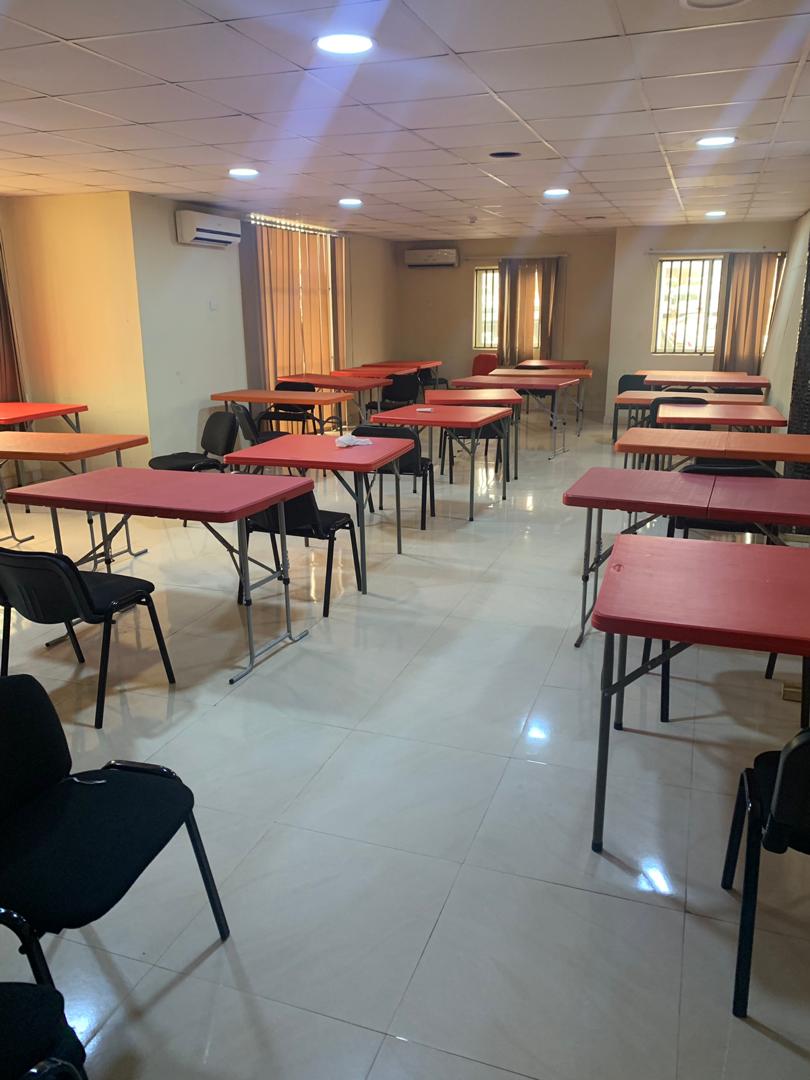
Training
At Ambrich Group Limited, we offer open and in-house courses, also bespoke training based on competence and drive to transfer relevant skills to our client. We train manpower in technical and soft skills which will make them stand out in the industry.
Some of the training we offer is as follows:
Training courses Available
Hazard and Risk Management
Duration: 2 days
Faculty: 1
Why take this Course?
A successful Occupational Health and Safety Management System (OHSMS) minimize the potential for injury or illness in the workplace. Effective and ongoing hazard and risk management is an important part of that system.
This course provides information and tools to assist those who are involved in developing or enhancing their organization’s hazard and risk management system. Through structured exercises and case studies, participants will be introduced to concepts, methods, and tools used to create, implement, evaluate, communicate, and maintain a successful hazard and risk management system.
Who should take this Course?Personnel such as Engineers, management, supervisors, Internal Auditors who are involved in or interested in developing, updating, or evaluating their organization’s hazard and risk management system.
Course Overview
| Module | Description |
|---|---|
| Module 1 | Occupational Health and Safety Management Systems |
| Module 2 | Hazard and risk management models |
| Module 3 | Hazard identification and risk assessment |
| Module 4 | Controlling hazards |
| Module 5 | Communicating and monitoring |
| Module 6 | Risk evaluation through severity and likelihood and concept of risk matrix |
| Module 7 | Procedure of risk mitigation and hierarchy of controls |
| Module 8 | Summary, conclusion of the course and concept review |
-Develop hazard and risk assessment in the workplace
-Identify hazard and risk, and take necessary steps to mitigate them
-Developing or enhancing their organization’s hazard and risk management system.
-Be better positioned to take up new challenges as a manager of an organization
Aspen Hysys
Duration: 8 Days (5 hrs daily) 10am to 3:00pm
Software used: Aspen Hysys
Faculty: 2
Why take this Course?
Aspen HYSYS (or simply HYSYS) is a chemical process simulator used to mathematically model chemical processes, from unit operations to full chemical plants and refineries. You will develop and analyze the maximum effectiveness of a process flow system. We will equip you with the necessary skills, insights and knowledge in steady-state & dynamic modeling with hysys.
The training will also cover practical hands-on approach in Steady state process simulation and design, which ensures that optimal designs are identified also that equipment is performing as-per specification and to evaluate retrofits and improve a process.
Who is qualified to take this Course?This course is meant for Process Engineers, Chemical Engineers, Mechanical engineers, Pipeline/ Piping Engineers, Petroleum Engineers, Reservoir, Gas Plant Operators/ Technician, Project engineers, Geologists, Students, Engineering Graduates and everyone interested in Process simulation and Optimization etc
Course Overview
HYSYS Steady State Modeling
| Module | Description |
|---|---|
| Module 1 | Aspen Hysys Basics |
| Module 2 | Propane Refrigeration Loop |
| Module 3 | Refrigerated Gas Plant |
| Module 4 | NGL Fractionation Train |
| Module 5 | Oil Characterization |
| Module 6 | Gas Gathering Operations |
| Module 7 | Two Stage Compression |
| Module 8 | Acid Gas Sweetening |
| Module 9 | Natural Gas Dehydration |
| Module 10 | Reporting & Simulation |
HYSYS Dynamic State Modeling
| Module | Description |
|---|---|
| Module 1 | Basic Control Knowledge |
| Module 2 | Steady state Modeling |
| Module 3 | Pressure-Flow (PF) specification theory |
| Module 4 | Dynamics Fundamentals 1 (column Design Dynamics) |
| Module 5 | Dynamics Fundamentals 2 (column rating Dynamics) |
| Module 6 | Equipment Sizing |
| Module 7 | Two Stage Compression |
1. Knowledge transfer to develop a process flow sheet
2. Be fully equipped with the necessary skill sets to prepare for a career in Process Design and Control
3. Advance in Process Engineering and be better positioned to take on bigger challenges
4. Understand and interpret a Process Flow Diagram(PFD)
HSE LEVEL 3 (SUPERVISORY HSE)
Duration: 3 days
Faculty: 2
Why take this Course?
Health, Safety and Environmental Management involves managing, controlling and handling all aspects of health, safety and the environment in the petroleum, manufacturing, food industry etc.
HSE certification as of today is regarded as one of the most significant certification training in several industries such as Oil & Gas, Marine, Manufacturing, Construction, Engineering, banking and finance etc.
It is assumed that the participants of the this course must have gone through HSE 1&2 course. This training is created to provide an in-depth knowledge of responsibilities and duty of an HSE officer in a workplace and an introduction to environmental management systems. Course is suitable for everyone whose activities have to do with leadership or could have a significant impact on the environment, or those introduced to environmental issues for the first time..
Who is qualified to take this Course?Everyone is qualified to take this course. This course is also suited for those who are already working in a safety-related position, or those who want to advance their career is Safety, or those who want to start a career in Safety. Wherever you are in the mix, this course is designed for you.
Course Overview
| Module | Description |
|---|---|
| HSE 1 |
|
| HSE 2 |
|
| HSE 3 |
|
At the end of this course, participants shall:
Be prepared for a career as Safety Officer, Health Officer, Environmental Officer etc
Get equipped to reduce risk and hazard in the workplace, home and other places
Advance in the knowledge and best practices in Health, Safety and Environment.
Oil and Gas safety
Duration: 2 days
Faculty: 2
Why take this Course?
Oil and gas industry workers engage in many activities that may expose them to serious hazards, such as falling from towers, unguarded machinery, being struck by heavy equipment, electrocutions and slice dust
The information, tools, and resources provided in this course are designed to help you identify, reduce and eliminate oil and gas related hazard
Who should take this Course?Oil and gas technicians, Engineers, Supervisors, managers and other persons interested in learning about Oil and gas safety
Course Overview
| Module | Description |
|---|---|
| Module 1 | The safety Culture |
| Module 2 | Working with Contractors |
| Module 3 | Involvement with Safety |
| Module 4 | SMS and Well site Analysis |
| Module 5 | Hazard Prevention and Control |
| Module 6 | Education and Training |
Identify OSHA requirements
2. Safety Management system(SMS) and well site analysis
3. Understand safety culture in the oil and gas industry
4. Prevent hazards and risk to the lowest minimum
AutoCAD 3D
Duration: 3 days
Faculty: 1
Why take this Course?
Autocad 3D training course objective is to teach the participants more advance features; on the technique; on how to design and model products in 3D design software, encapsulating surfaces and solids in visualizing engineering designs.
Who should take this Course?AutoCAD is used in industry, by architects, project managers, engineers, graphic designers, city planners and other professionals.
Course Overview
| Module | Description |
|---|---|
| Module 1 | 3D Modeling |
| Module 2 | Viewpoint |
| Module 3 | View ports |
| Module 4 | UCS |
| Module 5 | 3D Coordinate System |
| Module 6 | UCS, Wire Frame |
| Module 7 | Surface & Solid Modeling |
| Module 8 | Using 3D Surface Primitive |
| Module 9 | Shading the Model |
| Module 10 | Slice/section |
| Module 11 | Union/Subtract |
| Module 12 | Interfere/intersect |
| Module 13 | Solid Model Editing |
| Module 14 | Advantage of Solid Modeling |
| Module 15 | Rendering Techniques |
| Module 16 | About rendering engine |
| Module 17 | Anti-Aliasing |
| Module 18 | Rendering in View port |
| Module 19 | Rendering to File |
-Develop hazard and risk assessment in the workplace
-Identify hazard and risk, and take necessary steps to mitigate them
-Developing or enhancing their organization’s hazard and risk management system.
-Be better positioned to take up new challenges as a manager of an organization